Multi-Location Retail Shops: The Daily Problems That Quietly Kill Profit
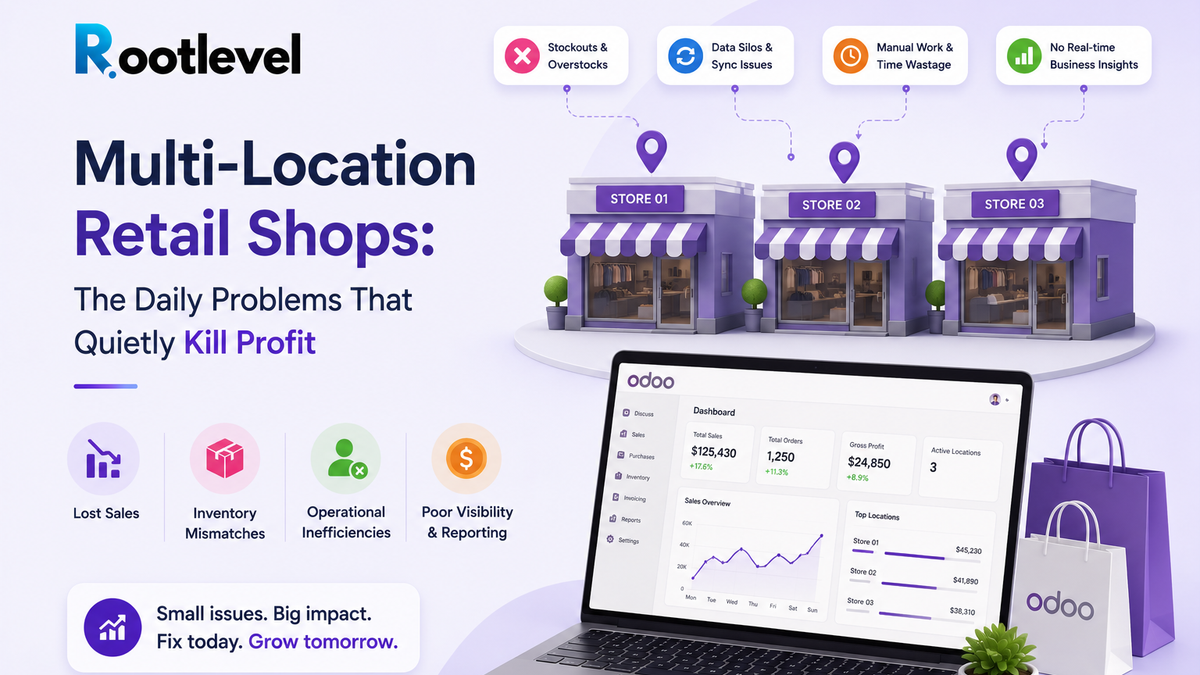
6 daily issues in multi-store retail that silently drain margin — and how one centralized Odoo system fixes stock, pricing, reconciliation, and reporting.
Running a retail shop is already hard. Running multiple locations makes it harder — not because you lack effort, but because small daily issues multiply.
Here are the most common pain points retail teams face every day (and the hidden cost behind them):
1) End-of-day stock counting wastes hours
Many shops spend 2+ hours daily on manual counting and adjusting.
Over a month, that becomes a big operational cost — and it still doesn’t guarantee accurate stock.
2) Reconciliation becomes a daily headache
Owners and accounts teams spend time matching sales, payments, and expenses — often in Excel.
This leads to confusion, file version issues, and team blame: “Who updated what?”
3) No real visibility of stock across locations
Without a proper system, you don’t know:
- what’s available right now
- what’s available in which store
- what needs replenishment
- what’s stuck as dead inventory
4) Pricing inconsistency kills margin
Different staff, different stores, different discounts — and suddenly margins drop quietly.
Without pricing rules, it’s hard to control profitability.
5) Customer and vendor tracking is weak
You can’t clearly identify:
- loyal customers
- repeat purchase behavior
- best vendors by reliability and pricing
So opportunities for retention and better purchasing are missed.
6) Reporting comes late (or never)
Sales by product, salesperson, store performance, due payments — all become delayed decisions.
And delayed decisions cost money.
The hidden cost of not fixing this
- You lose money through stock mismatch, dead inventory, and margin leakage.
- Growth becomes slower because decisions are based on guesswork, not real data.
The fix: One centralized system (Odoo)
Odoo helps multi-location retail businesses by bringing everything into one place:
- Real-time inventory across all stores (transfers, on-hand stock, purchase flow)
- Billing + accounting integration (less manual reconciliation, fewer mistakes)
- Reporting dashboards (what sells, what’s slow, what’s due, store-wise insights)